
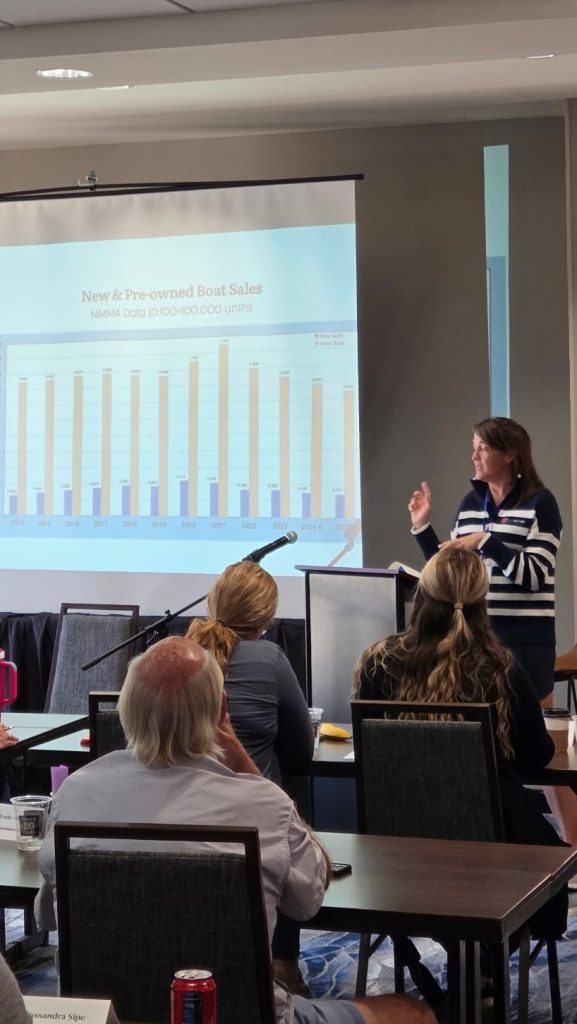
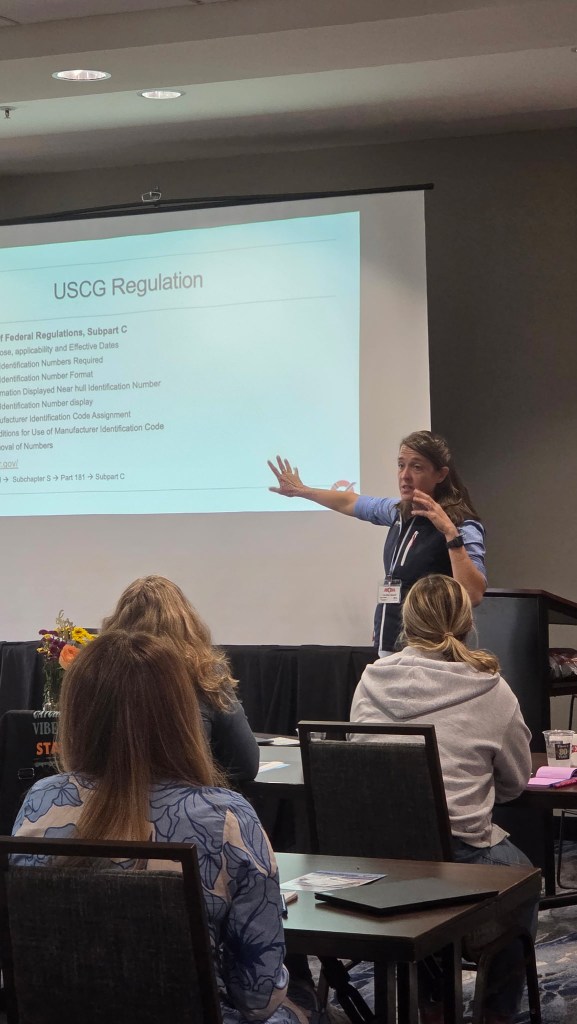
We were excited to kick off a great run of events in Norco, California at the American Vessel Documentation Association (AVDA) Annual Conference. Representing both the National Marine Lenders Association and Boat History Report, Caroline Mantel shared updates on key policy initiatives and led a discussion on one of the simplest, most powerful fraud controls we have in marine transactions, the Hull Identification Number.
A quick HIN refresher
A HIN is the vessel’s unique identifier, similar to a VIN for cars. In the United States it is a 12-character code that encodes the manufacturer, a serial sequence, and the build and model year. When the HIN is accurate and consistently recorded, it anchors everything that follows, documentation, titling, liens, service history, and insurance.
Why accuracy matters
- Fraud prevention: Cloned or altered HINs can hide theft, salvage history, storm damage, or title problems.
- Traceability: Accurate HINs ensure that service, recalls, surveys, and claims connect to the right hull.
- Compliance: Correct HINs help documentation agents, lenders, insurers, and state or federal authorities keep clean records and reduce rework.
Common pain points we see
- Transom HIN does not match the title, registration, or sales paperwork
- Transposed characters and typos during intake
- Non-standard placement or damaged plates that make characters hard to read
- Legacy records that carried an error forward for years
- “Creative” edits that attempt to mask storm or salvage history
Practical steps for your workflow
You do not need new software to raise the bar. Start with consistent checks and clear rules.
- Verify the HIN at intake
Confirm that the physical HIN on the vessel matches all documents. Capture photos, not just typed characters. - Validate the structure
Check that the HIN follows the expected 12-character format and that the manufacturer identifier aligns with the claimed builder. - Compare across the file
Match the HIN on the application, bill of sale, survey, insurance, and prior titles. Any mismatch should stop the process until resolved. - Look for tampering
Inspect for uneven stamping, mismatched fasteners around the plate, or signs of replacement. Ask for secondary locations or manufacturer confirmation when something seems off. - Use an independent data source
Run the HIN through Boat History Report to surface prior damage, salvage, documentation, and ownership indicators that may not appear in a single set of papers.
Policy themes discussed at AVDA
Caroline highlighted industry efforts that will help everyone who touches a transaction:
- Cleaner data exchange: Better alignment between state systems, USCG documentation, and commercial data, which reduces duplicate keying and error carry-over.
- Education first: Short, role-specific training for dealership staff, documentation agents, and lenders on HIN best practices and emerging fraud patterns.
- Consistent standards: Simple intake standards, for example requiring legible HIN photos and searchable PDFs, create fewer disputes and faster closings.
How Boat History Report supports the process
Our role is to make vessel history easy to verify. We help organizations:
- Validate HIN structure and manufacturer identifiers
- Review documentation status, title signals, and ownership history where available
- Surface reported damage, salvage, and insurance events that may change a risk decision
- Create an audit trail that shows what was checked and when
Thank you, AVDA
AVDA brought together an engaged, knowledgeable audience that cares deeply about accuracy and transparency. We appreciate the opportunity to collaborate with documentation professionals who set the tone for clean, defensible transactions across the industry.
If your team would like a short HIN verification checklist or a quick briefing tailored to your role, reach out and we will share resources.

 Boat History Report